Introduction
Scroll through any hosting provider’s website and you will see both terms: bare metal servers and dedicated servers. Many sellers use them interchangeably, and some use them for the exact same machine.
If you are about to spend real money on a physical server, this confusion matters. You might pay a premium for “bare metal” branding, or miss a better deal listed as a “dedicated server”. This article clears up what these two labels actually mean, where they genuinely differ, and which one fits your project.
The Short Answer
Hardware-wise, they are the same thing: a single-tenant physical machine that you rent exclusively. No virtualization layer, no noisy neighbors, full access to every core and every gigabyte of RAM.
The real difference is not in the metal. It is in how the server is delivered, billed, and supported. “Dedicated server” is the older, more traditional term. “Bare metal” is the newer marketing term, popularized by cloud providers, for physical servers wrapped in cloud-like automation.
What a Dedicated Server Traditionally Means
A dedicated server is the classic rental model. The provider owns the hardware, keeps it running in their data center, and hands you the whole machine.
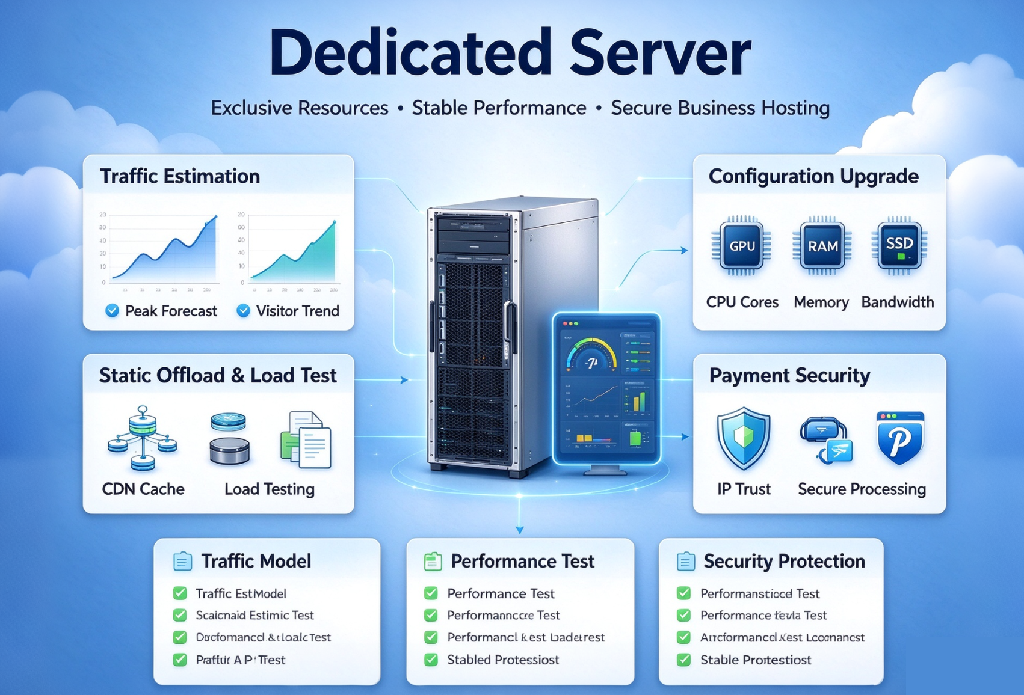
Traditional features of this model:
Monthly or yearly contracts, often with setup at fixed billing cycles;
Manual provisioning, sometimes taking hours or a day;
Access through IPMI, iKVM, or similar out-of-band management;
Pricing that rewards long commitments, with discounts for quarterly or annual terms.
This model has existed for decades. It is mature, stable, and usually the cheapest way to rent a specific hardware configuration.
What “Bare Metal” Usually Adds
Bare metal servers offer the same physical hardware, but delivered the way cloud instances are delivered. The term became popular as cloud providers started selling physical machines alongside virtual ones.
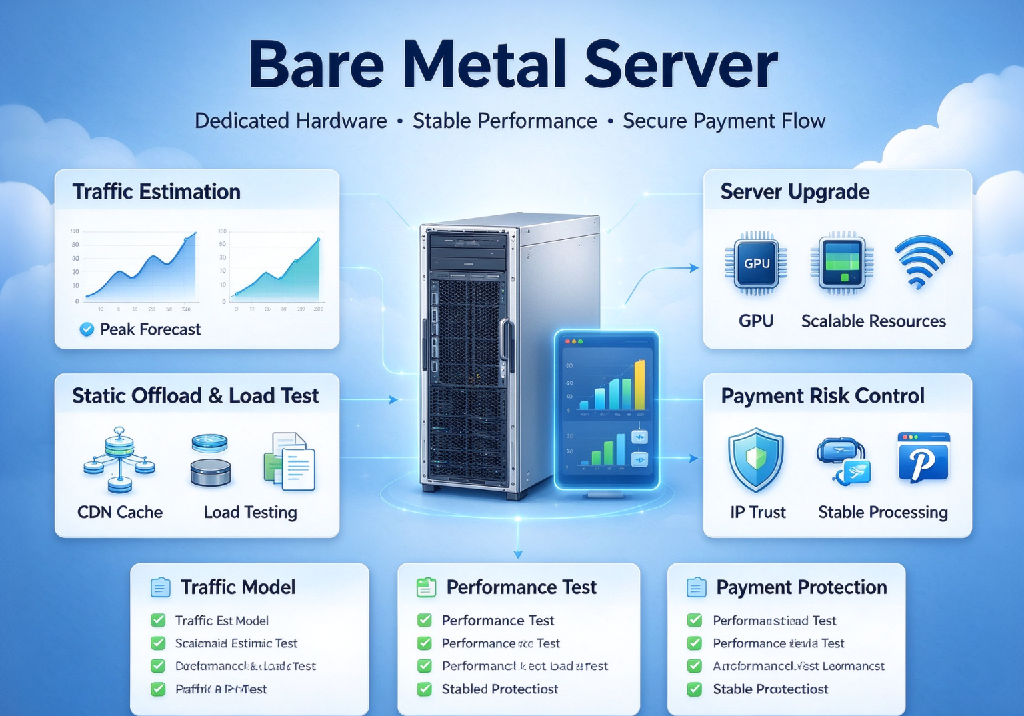
Typical bare metal features:
Fast, often automated provisioning, sometimes within minutes;
API and console-driven management instead of ticket-based setup;
More granular billing, including hourly or on-demand options;
Easy integration with cloud services like storage and load balancers.
In short, bare metal is dedicated hardware with a cloud experience on top. That experience has real value, and it is also why “bare metal” often costs more than an equivalent “dedicated server”.
Where They Genuinely Differ
Here is a practical comparison across the points that actually affect your wallet and your workloads:
Provisioning speed: dedicated servers can take hours; bare metal is often minutes;
Billing flexibility: dedicated favors fixed monthly terms; bare metal supports hourly or short cycles;
Management interface: dedicated gives you IPMI and tickets; bare metal gives you a cloud-style console and API;
Pricing: for the same hardware on a long contract, dedicated is usually cheaper;
Ecosystem: bare metal tends to sit closer to cloud services like object storage and private networks.
One warning from real-world experience: some providers simply renamed their dedicated server plans to “bare metal” without changing anything else. The label alone proves nothing, so always check what you are actually getting.
Five Questions to Ask Before You Order
Do not rely on the product name. Ask these instead:
How fast is provisioning, and is it automated or manual?
Do I get full out-of-band access like IPMI or iKVM?
Can I billing hourly or short-term, or only monthly contracts?
Is there any virtualization layer on the machine at all?
What happens when hardware fails, and what is the replacement SLA?
Clear answers to these five questions tell you more than any product page headline.
Which One Should You Choose?
For stable, long-running workloads, a classic dedicated server is hard to beat. Think game servers, mail servers, or a database that just needs to run for years. You get the same hardware for less money on longer terms.
Choose bare metal when flexibility matters more than the bottom line. AI and GPU workloads are a good example: projects often need to redeploy, resize, or release machines as experiments come and go. Cloud-style provisioning and hourly billing fit that rhythm much better.
A simple rule of thumb: buy dedicated for stability, rent bare metal for agility.
Conclusion
Bare metal and dedicated servers are the same hardware sold with different delivery models. Dedicated is the traditional rental: fixed terms, manual setup, lower price. Bare metal wraps the same machine in cloud-style automation: fast provisioning, API control, flexible billing, and a higher price tag.
Do not shop by label. Compare provisioning speed, billing granularity, management access, and failure handling. Then pick the model that matches how your project actually runs.
Thanks for reading to the end!